| ||||||||||||||||||||||||||||||||||||||||||||||||||||||||||||||||||||||||||||||||||||||||
| ||||||||||||||||||||||||||||||||||||||||||||||||||||||||||||||||||||||||||||||||||||||||
Thursday, 13 March 2014
Trekking in India 13.03.2014


India - Kerala tourism 13.03.2014
Kerala at a Glance
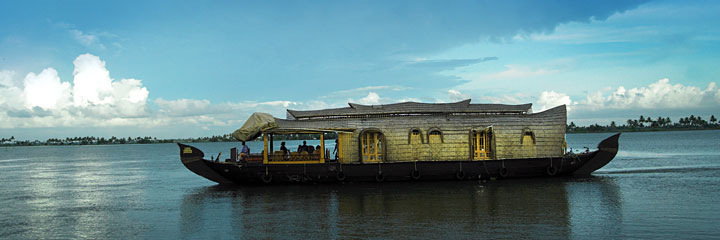
Kerala, God's Own Country
With the Arabian Sea in the west, the Western Ghats towering 500-2700 m in the east and networked by 44 rivers, Kerala enjoys unique geographical features that have made it one of the most sought after tourist destinations in Asia. An equable climate. A long shoreline with serene beaches. Tranquil stretches of emerald backwaters. Lush hill stations and exotic wildlife. Waterfalls. Sprawling plantations and paddy fields. Ayurvedic health holidays. Enchanting art forms. Magical festivals. Historic and cultural monuments. An exotic cuisine... All of which offer you a unique experience. And what's more, each of these charming destinations is only a two hour drive from the other - a singular advantage no other destination offers.Kerala, India's most advanced society: With hundred percent literacy. World-class health care systems. India's lowest infant mortality and highest life expectancy rates. The highest physical quality of life in India. Peaceful and pristine, Kerala is India's cleanest state.
Districts
Kasaragod
Kannur
Wayanad
Kozhikode
Malappuram
Palakkad
Thrissur
Ernakulam
Idukki
Kottayam
Alappuzha
Pathanamthitta
Kollam
ThiruvananthapuramMajor Cities
Thiruvananthapuram
Kollam
Kochi
Thrissur
KozhikodeLocation
Kerala is situated on the southwestern coast of India, a country in South Asia. This tropical paradise enjoys a unique topography with Arabian sea, a part of the Indian Ocean on the west and the Western Ghats on the east.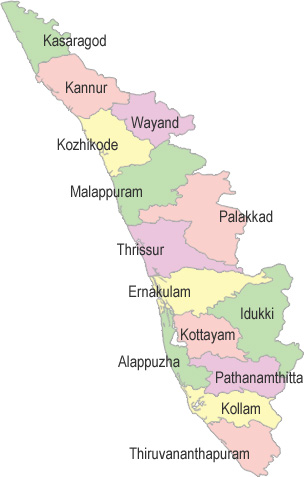
Geography
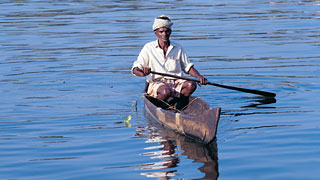
With the Arabian Sea in the west, the Western Ghats towering 500-2700 m in the east and networked by forty-four rivers, Kerala enjoys diverse geographical features. From tall mountains and deep valleys to endless backwaters and an extensive coastline, Kerala has it all.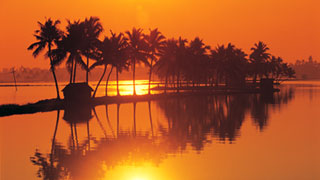
Seasons
Bestowed with a pleasant and equable climate throughout the year, Kerala is a tropical land with the coast running down its entire length and the Western Ghats forming a protective barrier against the dry winds from up north. The monsoons (June-September & October-November) and summer (February-May) are the seasons markedly experienced here, while winter is only a slight drop in temperature from the normal range of 28-32°C.
People and Life
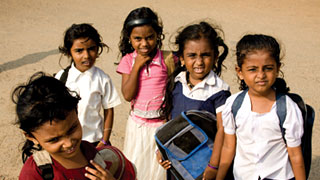
Kerala is one of India's most progressive states in terms of social welfare and quality of life. The State boasts of one of India's highest literacy rates, highest life expectancy and lowest child mortality rates. The literacy rate for women is one of the highest in all of Asia. Enjoying a unique cosmopolitan viewpoint, the people of Kerala, at all levels of society, have greater access to services and opportunities - as well as a greater say in their governance.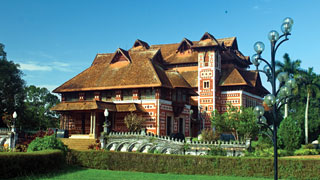
History
Kerala's history is closely linked with its commerce, which until recent times revolved around its spice trade. Celebrated as the Spice Coast of India, ancient Kerala played host to travellers and traders from across the world including the Greeks, Romans, Arabs, Chinese, Portuguese, Dutch, French and the British. Almost all of them have left their imprint on this land in some form or the other - architecture, cuisine, literature.
Accessibility
Airports
Visa requirements
For Visa information please click herePolice helpline
While travelling on Highways + 91 98461 00100 While travelling in Trains + 91 98462 00100Code of ethics for travellers & tour operators
Guidelines for Travellers & Tour Operators
About the Website
This is the official website of the Department of Tourism, Government of Kerala, and is one of the most popular travel websites in India. The site contains exhaustive information about Kerala, a State popularly known as God's Own Country. The website, which has been online since 1998, is currently available in 18 languages including 7 Indian languages. On an average, the site gets more than 250,000 hits/visits a month. The site is updated as necessary and frequently. The site contains a huge database on Kerala including 3000 videos, thousands of photos and several hundred audio clips.
The Kerala Tourism website has won several awards. It bagged the prestigious Award of Excellence instituted by the Government of India for the “Most Innovative Use of Information Technology” and “Best Tourism Website Portal” during the years 2000-2001, 2002-2003, 2005-2006 and 2010-11. The Kerala Tourism Website also bagged PC World Magazine’s Net 4 PC World Web Award 2008 for Best Indian Website in the category of Tourism. International recognition to the department's online initiatives came in the form of the Pacific Asia Travel Association's (PATA) Gold Award for the best E- Newsletter during the years of 2005 and 2012. In terms of web traffic, the site also came within the first 10 positions among tourism websites from countries in Asia and the Middle East.
Female Sex tourism 13.03.2014
Female sex tourism
From Wikipedia, the free encyclopedia
| Female Sex Tourism | |
 | |
| Destination Map of Female Sex Tourism | |
| Also referred as: | |
| Romance Tourism | |
| Sex tourism | |
Female sex tourism refers to tourism by females, who travel intending to engage in sexual activities with a sex worker. Female sex tourists may seek aspects of the sexual relationship not shared by their male counterpart, such as perceived romance andintimacy.[1] The prevalence of female sex tourism is significantly lower than male sex tourism.[2]
Female sex tourism occurs in diverse regions of the world. The demographics of female sex tourism vary by destination, but in general female sex tourists are usually classified as upper-middle to upper class women from a developed country, who travel to less developed countries in search of romance or sexual outlets.[3]
Female sex tourists can be classified in three types:
- Traditional sex tourists, who have similar characteristics and motives as male sex tourists.[3]
- Situational sex tourists, who do not intentionally put themselves in a sex tourist position, but find themselves involved in a sexual encounter with local men. Situational sex tourists may fall into the category of either being businesswomen, students, women in overseas conferences or other women who have different agendas that are non-sexual.[1]
- Romance tourists, who plan to fulfil their travel with romantic experiences that they cannot experience in their native country.[4]
Within the realm of female sex tourism, male sex workers are vital for the satisfaction of these women, whether physical or emotional. Without the employment of local sex workers, sex tourism for both men and women would not exist. Sex tourism is becoming a global phenomenon. With this movement of different populations to different countries, problems concerning health increase, especially ailments involving sexually transmitted infections (STIs) and HIV/AIDS. Women involved with sex tourism do not find themselves using barrier contraceptives during the majority of their visit, leaving them unprotected against STIs.[5]
Contents
[hide]Destinations[edit]
A number of countries have become popular destinations for female sex tourism, including Southern Europe; the Caribbean (led by Jamaica, Barbados and the Dominican Republic);Mexico, Southeast Asia, (Bali in Indonesia[6] and Phuket in Thailand); and Gambia, Senegal and Kenya in Africa.[7] Other destinations include Egypt, Tunisia, Morocco, Fiji,Ecuador and Costa Rica.[8]
Motives for travel[edit]
Traditional sex tourism[edit]
Traditional female sex tourists have the same intentions as their male counterparts, and travel to foreign countries that have lower wages, and take advantage of cheap prostitution at a level unaffordable in their own countries.
Examples of these sexual-economic relationships can be found in countries like Kenya, Africa, where women from the United Kingdom travel to Kenya to enjoy the sun and enjoy the “company of young men” in a sexual manner.[3]
Situational sex tourism[edit]
Situational sex tourists differ from traditional sex tourists by considering their sexual activities with the sex worker as an added amenity to their original motive to travel.[1]
The background of the situational sex tourist consists of first time tourists who do not plan on being involved intimately with local men. The majority of these first time tourist will become involved in relationships where the tourist becomes romantically involved with the local men rather than being exclusively physical with the sex workers.[9]
Situational sex tourism occurs when foreign tourists are lured in by male sex workers, known as either beach boys in the Caribbean, gringueros in Costa Rica or local men. According to the tourists, they are usually lured in due to the exotic appeal that these men emulate. The exotic appeal can come from the ethnic differences between the sex workerand the sex tourist or the foreign lifestyle that these men live [9]
The sex workers will target women who they deem vulnerable (Older or younger overweight women).[9]
Romance tourism[edit]
Romance tourism refers to a different relationship than female sex tourism. The term has been notably defined by researchers in this field, Deborah Pruitt and Suzanne LaFont.[4]
The concept of romance tourism came from Pruitt and LaFont’s observations in Jamaica; it appeared to them that the female tourist and local males viewed their relationship with each other solely based on romance and courtship rather than lust and monetary value.[9] Pruitt and LaFont add that romance tourism is an issue of gender identification: “gender identity is a relational construct, the Western women who seek to break from conventional roles require a different kind of relationship with men in order to realize a new gender identity”.[4] With Western women becoming more independent and financially self-reliant they are able to travel, showing their independence from men of their culture, “female tourists have the opportunity to explore new gender behavior”.[4] Like traditional sex tourists, romance tourists have a motive for travel, romance tourists travel to underdeveloped countries to find romantic relationships.[4]
Terminology[edit]
There is an ongoing debate on terminology regarding female sex tourism. Pruitt and LaFont argue that the term “female sex tourism” is not representative of the relationship that female tourists have with local men.[4] They argue that “female sex tourism” oversimplifies the motives of these women and that “romance tourism” explains the complex nature of what these women are engaging themselves in while involved in romance tours.[4] They also explain that the expression “female sex tourism”, “serves to perpetuate gender roles and reinforce power relations of male dominance and female subordination, romance tourism in Jamaica provides an arena for change”.[4]
Scholars such as, Klaus de Alburquerque come back and argue that the term “romance tourism” overcomplicates what the motives of sex tourists are. de Albuquerque explains that concepts like "romance tourism" are only representative of small niches, like that of Jamaica and its cultural beliefs. Through his research, he concludes that the majority of female sex tourists are solely touring for physical encounters and not romance.[9] He also says that the “tourist and beach boys may define their relationships as one of romance, [but] in reality, the relationship is one of prostitution”.[9]
Researcher, Jacqueline Sanchez-Taylor, argues that the term, “romance tourism”, and even the term “female sex tourism” undermines what is actually happening in these situations. She compares female and male sex tourism and shows how each relationship is based upon sexual-economic relationships. She also explores on whether or not female sex tourism is based on romance and if there is some sort of sexual-economic relationship occurring between the two parties. She continues to explain, “The fact that parallels between male and female sex tourism are widely overlooked, reflects and reproduces weaknesses in existing theoretical and commonsense understandings of gendered power…[and] sex tourism”.[10]
Sex workers[edit]
Background and intentions[edit]
Male sex workers have different names in different regions, Western society refer to them as sex workers and male prostitutes. In the Caribbean and Central America, most notablyCosta Rica, they label the sex workers as beach boys and gringueros, rent-a-dreads, rent-a-rastas, rent-a-gents and the Foreign Service (Caribbean),[11]
Male sex workers are not confined to the profession of sex work, they usually have an additional source of income that they may supplement while working as a sex worker.
Male sex workers have more freedom and security than female sex workers do because males are not confined to a brothel or a pimp and are not generally physically abused by their clients.[2]
Similar to the sex tourists, sex workers have their own intentions. Just as some Western women may consider the local men exotic, the local men may consider Western women to be exotic. Popular characteristics that appeal to a majority of sex workers are women with blonde hair and light colored eyes.[12] Some of the sex workers will specifically target this type of exotic woman for their own personal pleasure with no guarantee of monetary gain.[9]
On the other side of the spectrum, most sex workers have the intention of making some form of monetary gain. Such a sex worker typically profiles tourists, in hopes of increasing his monetary wealth the fastest. While profiling he will look for older women, over the age of forty or young, overweight women. The sex worker considers these women vulnerableand will play on their vulnerability to get the tourists to obtain feelings for the sex worker. Once the tourist and sex worker obtain a relationship the sex worker finds it easy for them to have an open relationship regarding monetary exchange.[9]
Defined by the tourist[edit]
Romance tourists do not label their sex workers “prostitutes”. The local men and the tourists understand their roles in the relationship. The primary difference in definition of a local man to a romance tourist and a local man to a sex tourist is the emphasis the romance tourist places on passion instead of a transaction of goods or money for sexual favors.[4]
Health risks[edit]
The rate of sexually transmitted infections, including HIV/AIDS, may be relatively high in some countries which are popular destinations for female sex tourism, particularly in comparison to the home countries of many sex tourists.[13] Little or no research has been done into the transmission rates of HIV and other STDs pertaining to sex tourism. Neither has there been reliable research done into whether or not condom use is prevalent among female sex tourists. However, writer Julie Bindel speculates, in an article for the Guardian, that HIV infection figures for the region suggest that condom use by the "beach boys" in the Caribbean may be sporadic, yet female sex tourists do not appear especially preoccupied by the potential risks.[14]
Women seeking to experience sex with foreign men put themselves at a higher risk for STIs. Condom use during sex tours is relatively low. It is often cited that women have the intention to have safe sex with their casual sex partners while on vacation, but at some point during the initiation of the condom, the women do not follow through.[5]
The sex workers usually will not initiate the use of a condom due to either the limited availability of condoms, cost, beliefs or previous experiences the sex worker has had with condoms.[12]
The lack of barrier contraceptives increases the risk of the tourist obtaining a sexually transmitted infection from their foreign partner especially when their partner has been with multiple women.
With sex tourism, women report that, given the atmosphere and the exoticness of their lover; condoms are rarely used or discussed prior to engaging in sexual activities.[12]
It has been found that in the Monteverde region of Costa Rica data researched by Nancy Romero Daza, has shown that female tourists in the region engage in some form of unprotected sexual activity with local men known as Gringueros. The women in the study were found to not be traditional sex tourists but situational sex tourists.[12]
Subscribe to:
Posts (Atom)